Posted by: Eye Health Northwest in Children on July 24, 2026
Maybe a doctor mentioned the term at your child’s last checkup, or a friend told you their kid wore a patch growing up. Either way, when “lazy eye” comes up, glasses are usually the first treatment people think of.
Glasses do play a role in treating lazy eye, but whether they fix it on their own depends on the individual case. Keep reading to learn how pediatric ophthalmologists approach this common childhood condition and where corrective lenses fit in.
What is Lazy Eye?
Lazy eye, medically known as amblyopia, is a developmental condition in which one eye fails to learn to see clearly during early childhood. The eye itself usually looks normal. The issue is in the connection between that eye and the brain. When a child’s brain consistently receives a blurry or mismatched image from one eye, it learns to favor the other and tunes out the weaker signal.
According to the American Academy of Ophthalmology, amblyopia affects roughly 3 percent of children in the United States, making it the leading cause of vision loss in kids. Catching it early matters because the visual system is most responsive to treatment before age 7 or 8.
When Glasses Can Fix Lazy Eye
There are several types of amblyopia, and the answer to whether glasses alone can fix it hinges on which type a child has.
The form most likely to respond to glasses is refractive amblyopia. This happens when one eye has a significantly stronger prescription than the other, often due to nearsightedness, farsightedness, or astigmatism.
Because the brain learns to ignore the blurry input, that eye never develops sharp vision. Correcting refractive errors gives the weaker eye a clear image to work with, and over weeks to months, the brain begins to use it more.
For mild to moderate cases caught early, glasses alone can restore good vision. Some children wear them full-time, and the condition gradually corrects itself.
When Glasses Are Only Part of the Treatment
For other forms of lazy eye, glasses might not be enough.
Strabismic amblyopia develops when the eyes are misaligned due to eye muscle problems. One eye points in a different direction than the other, and the brain suppresses the image from the deviating eye to avoid double vision. Treating strabismus often involves a combination of glasses, patching the stronger eye, and, in some cases, surgery to realign the eye muscles.
Deprivation amblyopia is the rarest and most serious form. It occurs when something physically blocks vision in one eye during early development, such as a congenital cataract or a drooping eyelid. Glasses cannot correct this on their own; the underlying cause must be addressed first, often surgically, followed by patching or atropine drops to retrain the brain.
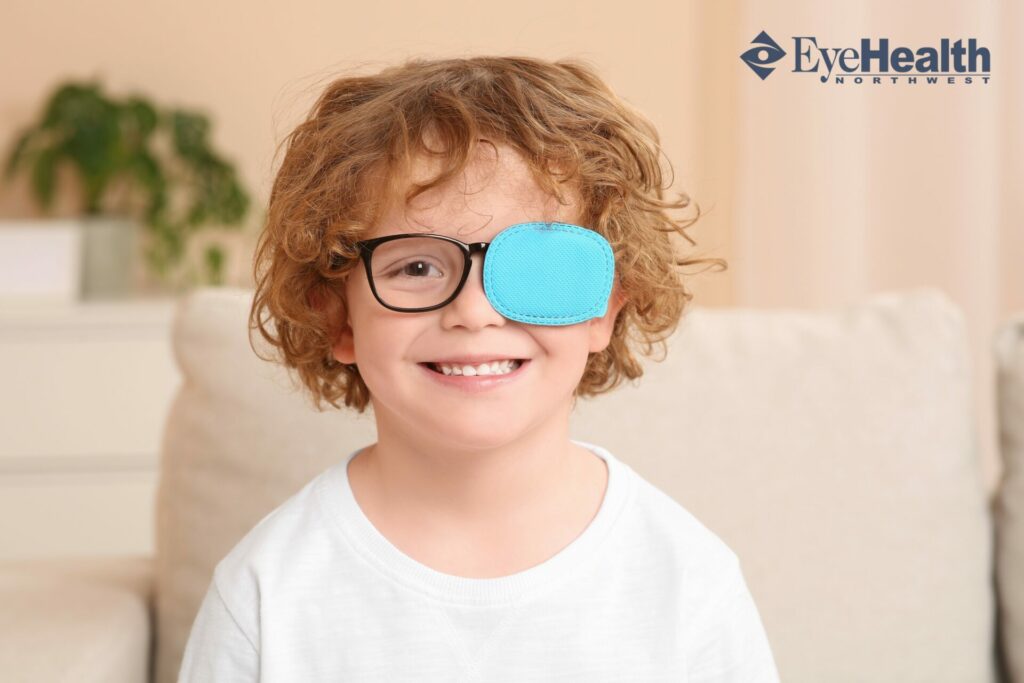
For many children, treatment also includes wearing an adhesive patch over the stronger eye for a few hours each day. The patch forces the brain to use the weaker eye and build the neural connections that should have formed earlier. Atropine drops work similarly by temporarily blurring the stronger eye.
How is Amblyopia Diagnosed?
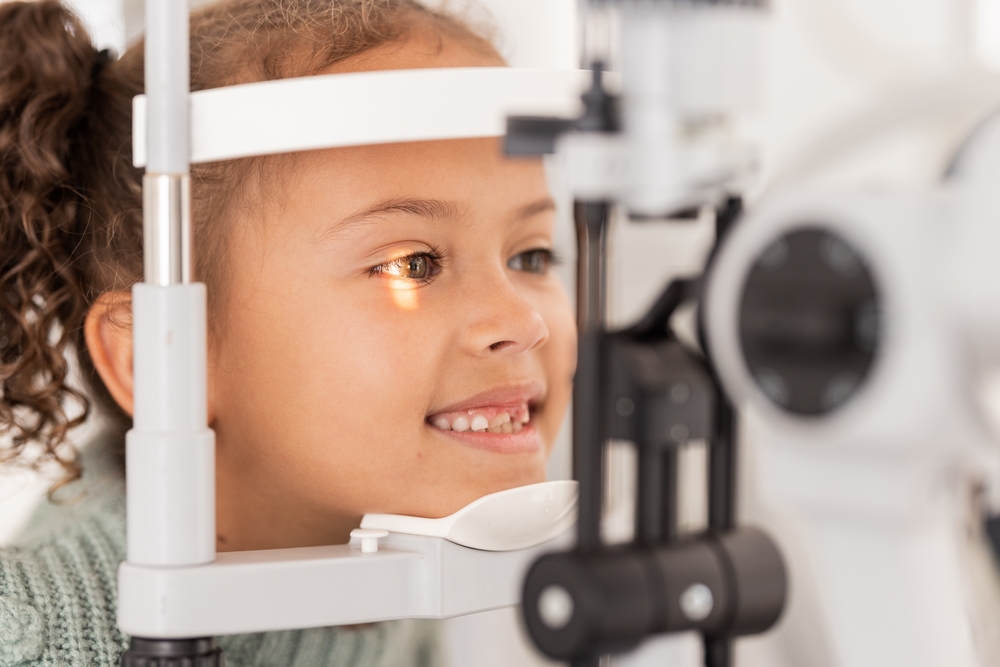
Spotting amblyopia at home is difficult because children rarely notice vision problems in one eye when the other compensates. Some signs to watch for include an eye that wanders, frequent squinting, head tilting while reading, or poor depth perception during sports. A thorough pediatric eye exam can identify the condition long before it becomes obvious to parents.
The experienced pediatric ophthalmologists at EyeHealth Northwest know what signs of amblyopia to look for and use age-appropriate testing for young patients. Once a diagnosis is made, fitting the right glasses for an active child is the next step.
The Right Treatment Starts With the Right Diagnosis
Whether glasses alone can fix your child’s lazy eye depends on the type of amblyopia and how early it is detected. For some children, the right prescription is enough.
For others, glasses are one piece of a larger plan that may include patching, drops, or surgery. If you suspect your child has lazy eye, schedule an appointment at EyeHealth Northwest in Portland, OR, today.